
Rust hardware supervision
← All work
AI · Case study
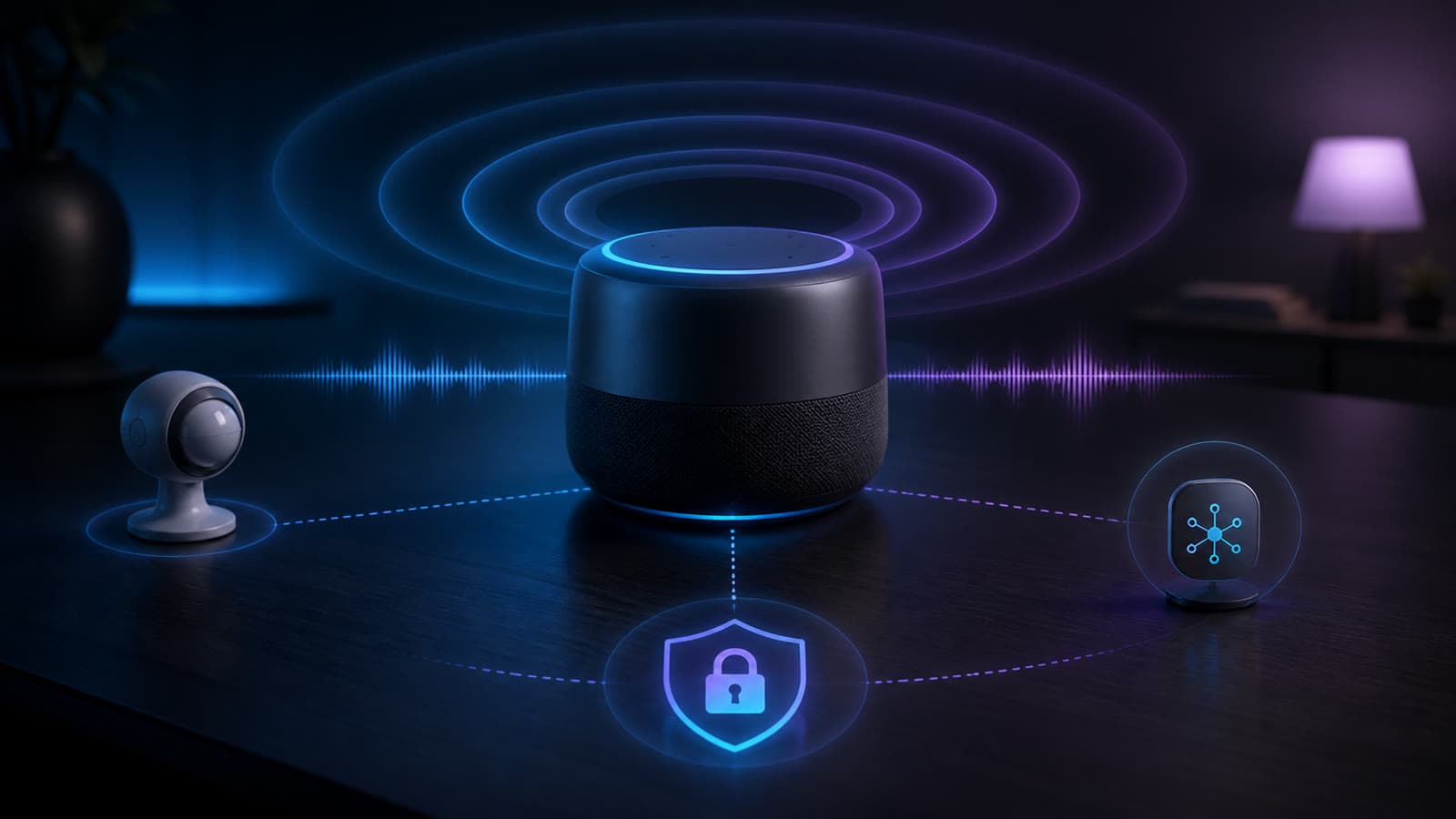
Embedded voice-assistant system with supervised Rust, C++, and Python services for wake-word, speech, IoT, and offline safety flows.
FocusAI
Core stackRust
Workstreams4
StatusDelivered
Overview
What we built
A reliable voice device needs several real-time services to cooperate without ever leaving the user stranded. This embedded stack coordinates a hardware supervisor, a wake-word service, and an asynchronous device kernel, each written in the language best suited to its job and held together under strict process supervision.
Voice-activity detection, structured inter-process communication, and connectivity for smart-home and low-energy devices sit on top, with an offline safety path that works even without a network. The result is a supervised architecture for dependable voice interaction, sensor streaming, and safety-critical functionality.
Technology
What we delivered
C++ wake-word processing
Python async device kernel
Voice, IoT, Zigbee, BLE, and offline SOS flows
How we approached it
A disciplined path from problem to working system.
Understand
We start with the users, the data, and the systems already in place.
Shape
We define the outcome and the technical approach before building.
Build
We deliver in visible increments with engineering quality throughout.
Operate
We support, observe, and evolve the system after it ships.
Outcome
A supervised embedded architecture for device interaction, sensor streaming, and reliable voice-led safety functionality.
Related work
More AI projects.



Let’s build what matters